
In public relations, companies often want to show that they care about diversity, inclusion and social responsibility. However, making a statement about these values is not the same as putting them into practice. The cases involving Starbucks, Dove and Hurricane Katrina show how quickly organizations can lose public trust when their communication fails to consider the people they are trying to reach. The biggest lesson is that effective public relations requires more than good intentions. It requires listening, preparation and meaningful action.
Why Authenticity Matters in Public Relations
One of the biggest challenges for companies is making sure their messages actually reflect their values. Starbucks' Race Together campaign attempted to start conversations about racial inequality, but the campaign also faced criticism about how a corporation should approach such a complicated issue. Logan (2016) explains how corporate efforts to address race must consider deeper social inequalities rather than treating them as simple conversations.
Dove faced a similar problem when an advertisement intended to celebrate diversity instead sparked accusations of racial insensitivity (Dove: A Purpose-Driven Brand, n.d.). According to the Associated Press (2017), Dove removed the advertisement and apologized after receiving backlash.

These examples show that a company's intentions do not automatically determine how audiences interpret its message. Organizations need to understand their audiences and recognize how their campaigns might be received before releasing them.
Listening Is Just as Important as Speaking
Another important takeaway is the value of preparation and two-way communication. The Hurricane Katrina case demonstrates how poor planning, conflicting messages and a lack of coordination can make an already serious crisis worse (Hurricane Katrina: A Disaster From Beginning to End, n.d.).
Although a natural disaster is very different from an advertising controversy, both situations show the importance of understanding public concerns and responding appropriately.
The reading Finding Authentic Moments; Avoiding #EpicFails (n.d.) emphasizes understanding a brand's history, recognizing cultural context and involving diverse perspectives in communication decisions.
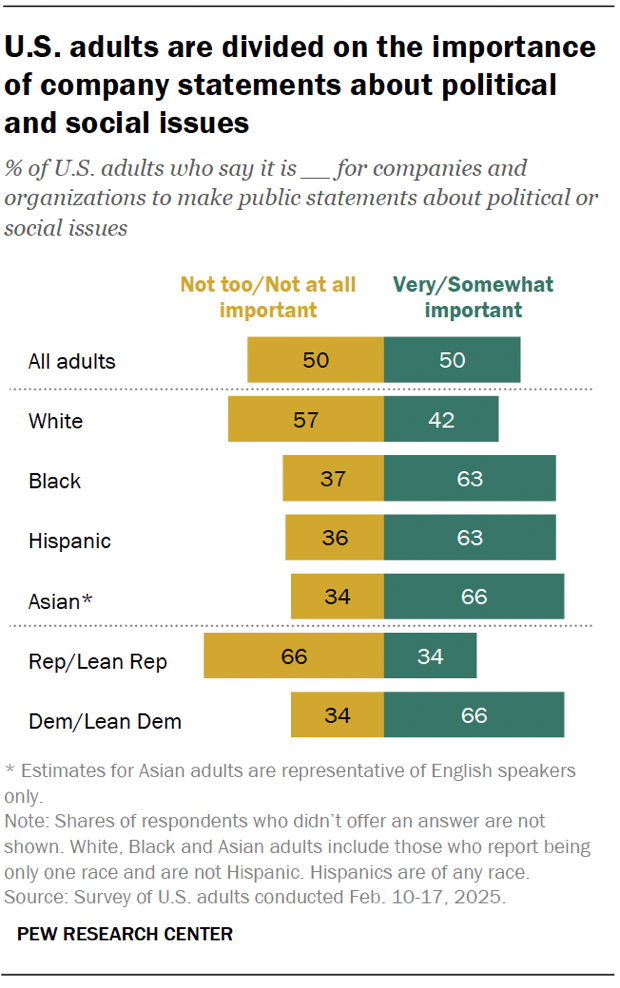
This is especially relevant today because audiences have different expectations about corporate involvement in social issues. A Pew Research Center study found that 50% of American adults consider corporate statements about social or political issues important, while the other 50% do not (Cheng & Horowitz, 2025).
To me, this reinforces why companies should not assume that one message will connect with everyone.
Building Trust Through Action
Ultimately, these cases show that public relations professionals have a responsibility to think beyond publicity and positive media coverage. A campaign can attract attention without successfully communicating its intended message.
I think organizations should spend more time gathering feedback, involving different perspectives and making sure their actions support their public statements. Diversity and inclusion should influence how decisions are made, not just how campaigns are advertised.
As someone studying public relations, my biggest takeaway is that trust is something organizations have to continually earn. Companies cannot expect audiences to believe their values simply because they include them in a campaign. Authentic communication starts with understanding people, acknowledging mistakes and following through with meaningful changes.
References
Associated Press. (2017, October 8). Dove apologizes for Facebook soap ad that many call racist. Boston.com. https://www.boston.com/news/business/2017/10/08/dove-apologizes-for-facebook-soap-ad-that-many-call-racist/
Cheng, K., & Horowitz, J. M. (2025, August 5). Americans divided on whether companies should make statements about political, social issues. Pew Research Center. https://www.pewresearch.org/short-reads/2025/08/05/americans-divided-on-whether-companies-should-make-statements-about-political-social-issues/
Dove: A purpose-driven brand in a crisis of sincerity: The struggle to navigate rising expectations of corporate responsibility.
Finding authentic moments; Avoiding #EpicFails.
Hurricane Katrina: A disaster from beginning to end.
Logan, N. (2016). The Starbucks Race Together initiative: Analyzing a public relations campaign with critical race theory. Public Relations Inquiry, 5(1), 93–113. https://doi.org/10.1177/2046147X15626969
Tags: Public Relations, Diversity and Inclusion, Crisis Communication, Corporate Social Responsibility, Brand Authenticity, Reputation Management